
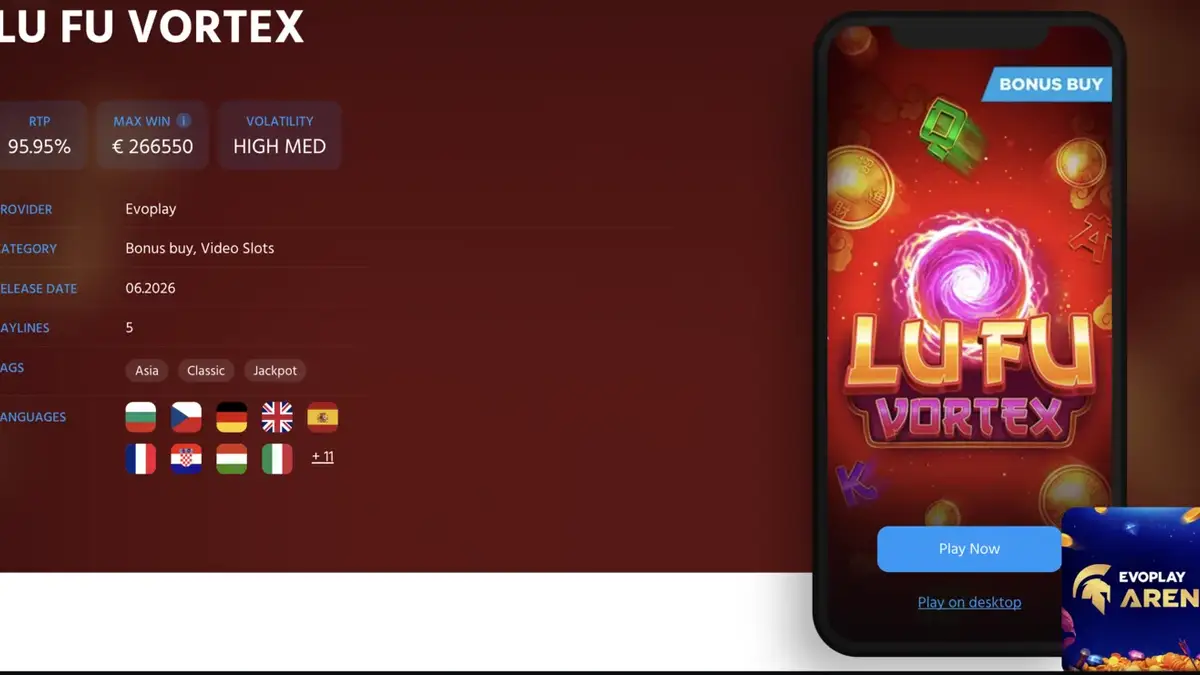
No. Lu Fu Vortex is treated here as bonus-buy video slot. The comparison is about theme, pacing and player expectation.

Evoplay comparison
GodPlay Plinko vs Lu Fu Vortex
A screenshot-backed comparison between GodPlay Plinko and Lu Fu Vortex, with mechanics kept separate and one external reference link inside the page.
facts, screenshots and links checked
Snapshot
GodPlay Plinko vs Lu Fu Vortex snapshot
Both include bonus-buy thinking, feature cost and the need to separate RTP from one session.
Lu Fu Vortex is a reel slot. GodPlay Plinko lets Zeus or Hades modify future ball drops.
Useful for readers comparing bonus buy controls across different game formats.
Game loop
Mechanics split
GodPlay Plinko uses a random ball drop, risk level, row count, payout slots, Zeus progress and Hades or Zeus bonus buys. Lu Fu Vortex is compared here as bonus-buy video slot. Similar mood does not mean the same RTP, volatility or bonus probability.
| Question | GodPlay Plinko | Lu Fu Vortex |
|---|---|---|
| Primary format | Plinko instant game | bonus-buy video slot |
| Theme | Greek gods, pegs, lightning and underworld heat | Lu Fu Vortex visual identity |
| Main decision | Risk, rows, stake and bonus-buy exposure | Different by game format |
| Useful comparison | Pace, risk language and page clarity | Useful for readers comparing bonus buy controls across different game formats. |
Reference
External reference link
This is the single external reference link for the compared project. It opens the page used for the screenshot and context notes.
Open Lu Fu Vortex reference pageVerdict
Comparison verdict
Compare Lu Fu Vortex with GodPlay Plinko for theme, page framing, round pace and risk wording. Keep GodPlay Plinko rule facts anchored to VeliPlay source material and the GodPlay screenshot set.
The practical lesson for the GodPlay site is to make the board, gods, bonus costs and RTP caveat visible before promotional language appears.
Content update history
- - Built public GodPlay Plinko guide from official VeliPlay page, demo configuration and screenshot set.
- - Official VeliPlay page modification date recorded in the research file.
FAQ
GodPlay Plinko questions players ask
No. It uses the screenshot for visual context and links to the reference page.
The external reference link appears inside this internal comparison page.
Both include bonus-buy thinking, feature cost and the need to separate RTP from one session.
RTP, volatility, provider rules and bonus behavior stay separate unless a source states otherwise.
Source notes
Comparison reading notes
The Lu Fu Vortex comparison page should be read with two layers in mind. The first layer is visible on the screen: bet size, risk setting, row count, payout slots and feature buttons. The second layer sits in the rules: RTP, house edge, bonus restrictions and what happens when a connection drops. Keeping those layers separate prevents a player from treating a dramatic animation as proof of a better chance.
The VeliPlay page gives enough confirmed facts to build a useful guide, but it also shows one important conflict around RTP. This site uses 96% because that value appears in the official meta wording and feature grid. The conflicting 97% metric is still mentioned where relevant so readers see the source limit rather than a polished claim.
The most useful habit is to test one variable at a time. Change risk without changing rows, then change rows without changing risk. After that, compare Zeus and Hades in demo with the same bet size. This slower approach makes the board easier to understand because each change has a visible effect on payout shape or exposure.
Bonus buys deserve their own budget line. Zeus at 50x and Hades at 100x are not small side buttons when the base bet rises. They should be tested as separate events with their own stop point. A player who treats the buy button as a recovery tool is no longer reading the game clearly.
Auto bet and Turbo are convenience tools. They do not improve RTP, and they can make a session move faster than intended. A clear round cap matters more than the animation speed. If the board starts to feel automatic, stopping is the cleaner choice than changing risk to force a different result.
The game fits adults who like short rounds, clear multiplier slots and bonus states with a strong visual theme. It does not fit anyone looking for income, debt recovery, pressure play or a way around local gambling rules. Real-money play should start only after demo practice and account terms are understood.
A second useful pass is to compare the visible interface with the rule layer behind it. The board can make a result feel close or earned, but stake size, risk settings, feature rules and account terms decide what the player is really accepting.
The RTP conflict should stay visible instead of being polished away. When one official surface supports 96% and another metric suggests 97%, the conservative reading is to cite the safer value and explain the mismatch.
For practice, change only one setting per demo run. Keeping stake, risk, rows and bonus choice separated makes it easier to see which part changed exposure and which part was normal variance.
Bonus buys should be treated as separate high-exposure events. A 50x or 100x button can drain a session faster than normal drops, so it needs its own stop point rather than being used to recover losses.